On February 5, 1845, Mary Shuck was born in a two-story log cabin to John and Nancy Shuck. The Shuck’s owned a farm in Iowa somewhere near Davenport. Mary recalled that, “this of course, was virgin territory at that time”. This would account for the lack of exact location where the farm was in Iowa. Around 1862, when she was 17 years old, her father moved the family west and eventually settled in Nebraska. They traveled in a covered wagon as part of a wagon train consisting of three other wagons. She remembers the Indians presence as they traveled through the prairies, but they did not disrupt them. As Mary remembered, “Iowa was wild, but Nebraska was wilder”. The family eventually found a place for their new farm. They brought what they could on the wagon and had to completely start over in a new place and the closest neighbors were miles apart.
Shortly after settling, Mary met a blacksmith named Joseph Thompson. In 1863, when she was 18, they were married and began setting up their own home in the same area. The couple started their new life in the middle of the Civil War years and even though the fighting wasn’t happening in the mid-west, the economic impacts were felt all the same. The states in the East were the predominant industrial producers and that is where most of the destruction was occurring. That severely impacted the manufacturing of products and food availability such as sugar, but the new couple did what they could to build their new life. As with most pioneers, they expected to survive on what they grew and raised.
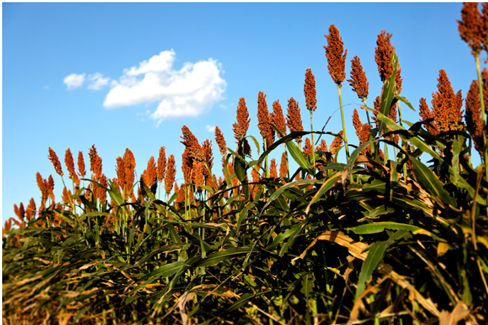
After getting married, Joseph decided to try farming, and their fruit options were limited to grapes, plums, and crab apples. Since sugar was hard to come by, they sweetened the fruit with sorghum (a grain used for baking and as a foraging crop).
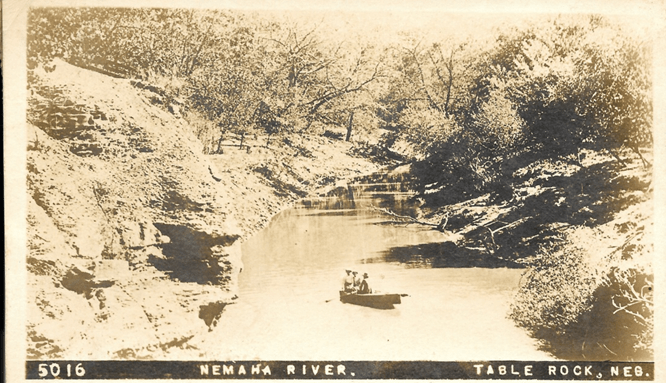
After several years of farming, Joseph built a flour mill on the banks of the Nemeha River.
In 1874, Mary’s family moved further west. Her husband wanted to explore Washington and Oregon as an option for a new settlement. So, the family packed up everything and took the train to San Francisco. The train ride was a grueling 11 days with no sleeper car available, so they had to sleep on the main seats for almost two weeks with kids in tow (holy cow! I can barely make it 5 hours in the car). Once they arrived in San Francisco, they took a ocean steamer to Portland, Oregon. They explored the West coast once again in a covered wagon as they pioneered for a new settlement. After leaving their home, and traveling such a long distance, Mary’s husband did not think either state was a good option, so they came back to Nebraska. What an emotional trip that must have been!
After arriving back in Nebraska and finding new land to settle, Mary’s husband set up another flour mill on the Nemaha some 30 miles from where it first stood. They lived there until 1900 when they moved again to Spokane, Washington. Her husband purchased a homestead, and they lived there until his death in 1922.
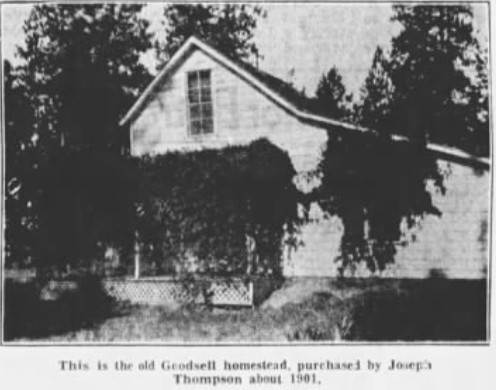
They had six children throughout their marriage. In 1932, The Spokesman-Review published a story about Mary Thompson. She was 87 at the time of the interview and had lived through the Civil War and now living through the Great Depression. Her outlook on things was so positive and encouraging. She was recorded as saying,
“It amuses me to hear people talk of the depression and hard times generally. We do not really know what hard times and depression are. We have become so accustomed to luxury that we cannot be reconciled to doing without many things not really essential to our physical well-being. It would seem to me that we have much to be grateful for in the way of comfortable housing, plenty of food and clothing, which, added to many friends, make our lives especially ideal”.
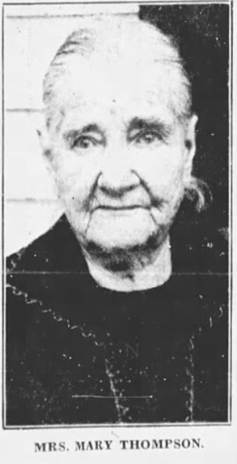
The reporter, Leoti L. West was so impressed by this lady that he included, “I could not but be impressed with the kindly, optimistic spirit of the good lady…She made light of the many hardships of her life and seemed only to breathe a spirit of gratitude because of her many blessings and because things are as well with her as they are.”
What a life she lived and now we get to tell her story after 93 years of its publishing. The publishing was her daughter’s idea to ensure her mother was identified as the pioneer woman, she most certainly was!

 Rebellious Corset
Leave a comment